CHILDREN'S NOVELS / ROMANS POUR ENFANTS

LA MALADIE D'ALZHEIMER : CAUSES, MECANISMES BIOLOGIQUES


LA MALADIE D'ALZHEIMER : CAUSES, MECANISMES BIOLOGIQUES, SYMPTOMES ET DIAGNOSTIC, TRAITEMENTS


La maladie d’Alzheimer est la maladie neurodégénérative la plus fréquente chez le sujet âgé. L’allongement de la durée de vie moyenne du à l’amélioration des conditions de vie est en partie une des raisons qui expliquent l’augmentation du nombre de personnes concernées par cette pathologie. Aujourd’hui, on estime que 900 000 personnes souffrent de démences de type Alzheimer en France, et 35 millions de malades dans le monde. Alors que sa survenue avant 65 ans est rare (0,5 %), sa fréquence est de 2 à 4 % une fois passé cet âge. Ensuite, elle augmente proportionnellement avec celui-ci, pour dépasser 15 % à 80 ans. Cette maladie touche de plus en plus de femmes (1 femme sur 4 et 1 homme sur 5 après 85 ans).


CAUSES ET MECANISMES BIOLOGIQUES

Les formes héréditaires dites « familiales » de la maladie d’Alzheimer sont très rares et représentent moins de 1 % des cas. Elles se déclarent avant 60 ans. Les symptômes commencent parfois dès la trentaine ou la quarantaine. La maladie n’est pas une maladie héréditaire au sens strict dans 99% cas mais des facteurs génétiques de prédisposition, c’est-à-dire augmentant le risque de développer la maladie ont été identifiés. Par exemple être porteur d’un allèle spécifique du gène ApoE (l’ApoE4), qui intervient dans plusieurs mécanismes de protection neuronale, augmente le risque de développer la maladie (3 à 15 fois selon que l’on est porteur d’un ou deux allèles APOE4). Cependant cet allèle n’est ni suffisant ni nécessaire pour développer la maladie puisque certaines personnes porteuses de cet allèle ne seront pas malades alors que des non-porteuses développeront la maladie.

Certains facteurs dit « environnementaux » ont été associés à la maladie d’Alzheimer, comme un manque de sommeil chronique ou la prise de certains psychotropes, comme les benzodiazépines qui peuvent augmenter le risque de développer la maladie. Récemment, une liste, certes encore incomplète, des facteurs de risque de la maladie d’Alzheimer a été publiée. Parmi les facteurs à prendre en compte, citons la consommation excessive d’alcool, les traumatismes crâniens, la pollution atmosphérique, le faible niveau d’instruction, l’hypertension artérielle, les problèmes d’audition, le tabagisme, l’obésité, la dépression, l’inactivité physique, le diabète et l’isolement sociale.

La dégénérescence des neurones qui survient dans la maladie d’Alzheimer est le résultat de la progression concomitante de deux types de lésions : d’une part l’accumulation anormale à l’extérieur des cellules de peptides ß-amyloïde (ou encore peptides A-bêta ou peptides Aß) conduisant à la formation de « plaques amyloïdes » encore appelées « plaques séniles », et d’autre part l’accumulation anormale de la protéine TAU dans les neurones conduisant à leur dégénérescence.


SYMPTÔMES ET DIAGNOSTIC

La perte de mémoire est souvent le premier symptôme de la maladie d’Alzheimer qui permet d’orienter le diagnostic. Ensuite, surviennent des troubles des fonctions exécutives, des troubles de l’orientation temporo-spatiale, puis progressivement s’installent des troubles du langage (aphasie), de l’écriture (dysorthographie), du mouvement (apraxie), du comportement, des troubles de l’humeur (anxiété, dépression, irritabilité). Le fait que le patient ne soit pas conscient de ses déficits (anosognosie) mais que ce soient les proches qui rapportent les troubles est en soi un critère de diagnostic.

Le diagnostic est clinique et fait aujourd’hui appel à des tests diagnostiques performants tels qu’une évaluation neuropsychologique complète des fonctions cognitives, des examens d’imagerie tels que l’IRM et la TEP au glucose qui mettent en évidence les zones du cerveau en souffrance, et enfin la ponction lombaire qui est capable de montrer les signes biologiques de la maladie, c’est-à-dire la présence de dépôts anormaux de protéine amyloïde et de protéine tau.


TRAITEMENTS

La prise en charge de la maladie d’Alzheimer a aujourd’hui pour but de ralentir la progression de la maladie et permettre au patient et à son entourage de s’adapter aux handicaps. La prise en charge est donc pluridisciplinaire.

Il n’existe malheureusement pas encore aujourd’hui de traitement qui s’attaque directement aux causes et aux mécanismes à l’origine de la maladie. Deux types de médicaments (les inhibiteurs de l’acétylcholinestérase et la mémantine) sont validés et sont utilisés partout dans le monde. Ils renforcent les circuits cérébraux et stabilisent dans certains cas le tableau clinique de la maladie.

Les lésions responsables de la maladie

A ce jour les causes de la maladie d’Alzheimer restent encore mal connues. En revanche, il est établi qu’avant même l’apparition des premiers symptômes, les neurones sont affectés par deux types de lésions : les plaques amyloïdes que l’on retrouve entre les neurones, et la dégénérescence neurofibrillaire que l’on retrouve à l’intérieur des neurones. Ces deux lésions correspondent à des amas de protéines qui se forment lors du processus normal du vieillissement. Cependant, dans les maladies de type Alzheimer, ces protéines s’accumulent en beaucoup plus grande quantité

Les plaques amyloïdes

Les plaques amyloïdes, ou plaques séniles, sont formées par l’accumulation anormale d’une protéine dite « Î²-amyloïde ». Ces plaques se déposent entre les cellules nerveuses situées dans la substance grise du cortex cérébral, provoquant un dysfonctionnement des connexions entre les neurones.


Les dégénérescences neurofibrillaires

La dégénérescence neurofibrillaire correspond à une accumulation anormale de filaments à l’intérieur du neurone. La protéine à l’origine de ce dysfonctionnement est appelée « protéine Tau ».

La dégénérescence neurofibrillaire entraîne progressivement une désorganisation cellulaire puis, la mort neuronale.

La mort des neurones s’opère avant tout dans l’hippocampe, une des régions essentielles de la mémoire, et dans le cortex associatif, qui permet de relier entre elles différentes fonctions. La mort neuronale aura pour conséquence une atrophie de certaines zones cérébrales, c’est-à-dire une diminution du volume du cerveau.

Les facteurs de susceptibilité génétique

Très rares, les formes familiales ou héréditaires représentent moins de 1% des patients souffrant de la maladie d’Alzheimer. Cette forme purement génétique se caractérise par une apparition très précoce des symptômes (généralement autour de 50 ans) et par une transmission dite autosomique dominante (la moitié de chaque génération est atteinte).

Les formes non-familiales et sporadiques représentent plus de 99% des malades et se développent généralement après 65 ans. Bien que non héréditaires, ces formes sporadiques semblent comporter une prédisposition génétique.

Le gène ApoE4 est le facteur de risque le plus important de la forme sporadique de la maladie d’Alzheimer. Des trois variantes du gène ApoE (ApoE2, ApoE3 et ApoE4), la variante ApoE4 est associée à un risque accru de maladie d’Alzheimer. Cependant, la présence de l’ApoE4 n’est ni nécessaire, ni suffisante pour développer la maladie. Cela signifie qu’une personne qui n’est pas porteuse du gène ApoE4 peut quand même développer la maladie d’Alzheimer et qu’un individu porteur du gène ApoE4 n’en sera pas nécessairement atteint.

Les facteurs de risques associés à la maladie d’Alzheimer

La maladie d’Alzheimer est une pathologie multifactorielle dont l’apparition provient de l’interaction entre un terrain génétique et des facteurs de risque. Ce dernier renvoie à la notion de probabilité, à savoir que sa présence augmente statistiquement le risque de développer la maladie sans en être la cause (par exemple le tabac augmente fortement le risque de cancer du poumon, pour autant un fumeur de longue date peut ne jamais le développer).

L’âge est le principal facteur de risque avéré avec une prévalence qui double tous les 5 ans à partir de 65 ans (2% après 65 ans, 15% après 80 ans). Les femmes sont aussi plus à risque que les hommes : 60% des malades sont des femmes. Cela s’explique en partie par une longévité plus importante mais il existe probablement des facteurs génétiques spécifiques qui restent à explorer.

D’autres facteurs de risque sont dorénavant bien établis :

  • le faible niveau d’instruction ;
  • Les facteurs de risques cardiovasculaires: l’hypertension artérielle non traitée, les accidents vasculaires cérébraux, l’hypercholestérolémie, le diabète, le surpoids, l’obésité ;
  • les facteurs environnementaux (tabac, alcool, pollution, certains médicaments…)
  • les troubles du sommeil ;

Certains facteurs de risques moins fréquemment cités sont de plus en plus documentés :

  • l’inflammation chronique de l’organisme (augmentation récurrente et persistante des globules blancs) est liée à un rétrécissement des zones cérébrales impliquées dans la maladie d’Alzheimer ;
  • les antécédents de traumatismes crâniens avec perte de conscience supérieure à 5 minutes favoriseraient une apparition précoce des symptômes de la maladie en raison d’une fragilisation du cerveau ;
  • les troubles de l’humeur comme le stress chronique ou la dépression sont également liés à la maladie d’Alzheimer.

Par ailleurs, une alimentation peu équilibrée, le manque d’activité physique et d’activité intellectuelle stimulante pourraient être également associés à un risque augmenté de maladie d’Alzheimer.

A l’inverse, une pratique sportive régulière, notamment de l’aérobic ou l’apport de certains éléments nutritionnels (riches en substances anti-oxydantes) pourraient avoir un effet protecteur.


Qu’est-ce que la maladie d’Alzheimer ?

C’est en 1906 qu’Aloïs Alzheimer découvre la maladie qui porte son nom. Cette affection entraîne une disparition progressive des neurones dans les régions du cerveau qui gèrent certaines capacités, comme la mémoire, le langage, le raisonnement ou encore l’attention. Les cellules perdent leurs fonctions, puis meurent. En disparaissant, les neurones ne peuvent plus programmer efficacement un certain nombre d’actions,  les pertes de mémoire, troubles du comportement et autres symptômes apparaissent alors.

Résultat : certaines facultés sont altérées et réduisent peu à peu l’autonomie de la personne. Mais si la maladie d’Alzheimer apparaît plus souvent chez les personnes âgées, elle n’est pas pour autant une conséquence normale du vieillissement.

Généralement, la maladie d’Alzheimer apparaît en corrélation avec plusieurs facteurs de risque. Parmi les principales causes identifiées de la maladie d’Alzheimer, on peut noter la sédentarité, les maladies cardio-vasculaires, ou encore la solitude. Contrairement à ce que l’on peut encore lire dans certaines revues, aucune étude scientifique sérieuse n’a pu, à ce jour, confirmer l’hypothèse d’un lien de cause à effet entre absorption d’aluminium (par le biais de contenants alimentaires, d’ustensiles de cuisine ou de produits d’hygiène) et maladie d’Alzheimer.

Comment la maladie d’Alzheimer agit-elle sur le cerveau ?


La maladie d’Alzheimer est souvent associée à la perte de mémoire. En effet, ce sont les neurones localisés dans la région de l’hippocampe, siège de la mémoire, qui sont atteints en premier par le phénomène de dégénérescence. Mais ce n’est pas tout. Au fur et à mesure de son évolution, la maladie touche d’autres zones du cerveau, compliquant la capacité à communiquer, à réaliser plusieurs choses en même temps ou les actes de la vie quotidienne. C’est pourquoi la présence d’un aidant familial ou professionnel aux côtés de la personne malade est généralement nécessaire.

La maladie d’Alzheimer entraîne deux types de lésions du système nerveux central ; le dysfonctionnement d’une protéine essentielle aux neurones appelée “Tau” et l’apparition de plaques dites « séniles » due à une autre protéine “bêta amyloïde”.

Peu à peu, ces lésions se multiplient et envahissent les régions supérieures du cerveau. La maladie devient alors de plus en plus visible. C’est généralement à ce stade que le diagnostic est posé.

Est-ce une maladie héréditaire ?

Les études montrent que dans 99 % des cas, la maladie d’Alzheimer n’est pas héréditaire. Cela signifie que pour une personne malade sur 100, la maladie a pour origine un gène défectueux hérité de l’un des parents. Dans ce cas, la maladie se développe le plus souvent à un âge plus précoce : Les recherches menées par l’Inserm indiquent que 10 % des cas de maladie d’Alzheimer chez les patients de moins de 65 ans sont des formes familiales héréditaires rares de la maladie.

A quel âge peut-on avoir la maladie d’Alzheimer ?

La maladie d’Alzheimer apparaît le plus souvent après l’âge de 65 ans où elle concerne environ 3 % de cette tranche d’âge. Elle augmente rapidement pour atteindre plus de 20 % de la population âgée de plus de 80 ans.

Mais plus de 65 000 personnes de moins de 65 ans en France sont atteintes de la maladie d’Alzheimer ou d’une maladie apparentée.

Souvent oubliées des discours sur la maladie, elles rencontrent des problèmes spécifiques liés à l’incidence sur la vie professionnelle, familiale et à l’accès aux dispositifs d’accompagnement…

Source : Dementia in Europe Yearbook 2019 – Estimating the prevalence of dementia in Europe

Comment évolue la maladie d’Alzheimer ?

L’évolution de la maladie est très variable d’un patient à l’autre. Elle dépend notamment de l’âge de la personne malade au moment du diagnostic, de son état de santé général, du niveau de prise en charge médicale dont elle bénéficie et de l’apparition ou du développement d’autres pathologies.

On distingue trois stades dans la maladie d’Alzheimer :

  1.  
    1. Stade légerEnviron 25 % de l’hippocampe diminue en volume et le lien entre mémoire à court terme et à long terme se fait plus difficilement. Le déficit cognitif est subtil :  le patient a des oublis bénins de noms ou d’événements récents qui s’intensifient avec le temps.
    2. Stade modéréD’autres zones du cerveau sont touchées, ce qui engendre des troubles du comportement, des gestes, du langage et de la reconnaissance. La personne atteinte d’Alzheimer a besoin d’une aide pour certaines activités (se déplacer, gérer son budget, faire à manger…).
    3. Stade sévère : Les lésions progressent et la récupération des informations est quasiment impossible : les événements et informations passés disparaissent de la mémoire.  La défaillance des cellules cérébrales est importante. Le patient, atteint de démence, a perdu son autonomie pour presque tous les actes de sa vie quotidienne.

Quelle est l’espérance de vie d’une personne malade d’Alzheimer ?

L’espérance de vie d’une personne malade d’Alzheimer varie de huit à douze ans à partir du moment où le diagnostic est établi. Mais il ne s’agit que d’une moyenne. Il est important de considérer l’âge de la personne au moment du diagnostic.

Meurt-on de la maladie d’Alzheimer ?

La maladie d’Alzheimer ne peut pas être la cause directe de la mort. Mais des complications indirectes, notamment des infections, réduisent l’espérance de vie des personnes qui en sont atteintes. Les troubles de la déglutition augmentent par exemple le risque de développer une pneumonie qui est l’une des causes les plus fréquentes de décès chez les personnes atteintes de la maladie d’Alzheimer.

Existe-t-il un traitement contre la maladie d’Alzheimer ?

A ce jour, il n’existe aucun traitement capable de guérir ou de freiner l’évolution de la maladie d’Alzheimer. Certains médicaments, notamment le Donépézil (Aricept), la Rivastigmine (Exelon), la Galantamine (Reminyl) et la Mémantine (Ebixa), peuvent néanmoins être administrés au patient pour atténuer les symptômes cognitifs de la maladie. 


Comments


Searching for the Lost Path in the Desert: The Story of a Brave Young Man.


Searching for the Lost Path in the Desert

The story of Ali lost in the desert follows the adventures of a young man named Ali who gets lost in the desert after leaving his homeland in search of adventure. After facing difficulties and with the help of kind strangers, Ali began to learn important lessons about life, nature and cultural diversity. Over time, he became more involved in more responsible travel and began to share his knowledge with others, while staying in touch with his roots and family. Showing how every trip can be an opportunity to learn, grow and contribute to a better world for all, the story highlights the importance of human relationships.


  • ASIN ‏ : ‎ B0C2SG69WW
  • Éditeur ‏ : ‎ Independently published (30 avril 2023)
  • Langue ‏ : ‎ Anglais
  • Broché ‏ : ‎ 72 pages
  • ISBN-13 ‏ : ‎ 979-8393110581
  • Poids de l'article ‏ : ‎ 150 g
  • Dimensions ‏ : ‎ 14.81 x 0.43 x 21.01 cm
  •  
  •  
  •  
  •  


Ali, Lost in the Desert: Hope and Adversity


Ali, Lost in the Desert

The story of Ali lost in the desert follows the adventures of a young man named Ali who gets lost in the desert after leaving his homeland in search of adventure. After facing difficulties and with the help of kind strangers, Ali began to learn important lessons about life, nature and cultural diversity. Over time, he became more involved in more responsible travel and began to share his knowledge with others, while staying in touch with his roots and family. Showing how every trip can be an opportunity to learn, grow and contribute to a better world for all, the story highlights the importance of human relationships.
The purpose of Ali's story lost in the desert is to inspire readers to see each trip as an opportunity to learn, grow, and contribute to the world around them. The story encourages readers to be open-minded, accept cultural diversity, and care about the natural environment. It also emphasizes the importance of human connectedness and generosity to others, even strangers. Ultimately, this story aims to show that travel is not just a geographical movement, but an opportunity to develop a sense of personal responsibility and a commitment to a more just and sustainable world.


  • ASIN ‏ : ‎ B0C2SY6985
  • Éditeur ‏ : ‎ Independently published (30 avril 2023)
  • Langue ‏ : ‎ Anglais
  • Broché ‏ : ‎ 72 pages
  • ISBN-13 ‏ : ‎ 979-8393114213
  • Poids de l'article ‏ : ‎ 150 g
  • Dimensions ‏ : ‎ 14.81 x 0.43 x 21.01 cm
  •  
  •  
  •  


DOT TO DOT BOOK FOR KIDS AGES 4 -8: Connect the Dots Puzzles for Children - Activity Book for Learning - Age 4-6, 6-8 Year Olds, Fun and Challenging Join the Dots: The mindful way to relax and unwind


A dot-to-dot book for kids is a book that includes a series of numbered dots on each page, with lines that can be drawn between the dots to reveal a hidden image. These books are designed to help young children develop their fine motor skills, hand-eye coordination, and concentration, while also providing an enjoyable and rewarding activity.

Dot-to-dot books typically come in a variety of themes, such as animals, vehicles, space, and cartoons. They can be found in different levels of difficulty, from simple dot-to-dot images with fewer dots to more complex ones with hundreds of dots.

In addition to being a fun activity, dot-to-dot books can also be used to teach children about numbers and counting. As they connect the dots in the correct sequence, children can learn to count and recognize numbers in a visual and engaging way.

Overall, dot-to-dot books for kids can be a great tool for parents and teachers to help young children develop important skills in a fun and enjoyable way.


DOT TO DOT BOOK FOR KIDS AGES 4 -8

The goal of the connect the dots game is to draw a picture by connecting the dots.
Each dot is associated with a number, letter or symbol indicating the correct sort order.
DOT-TO-DOT For Children & Adults Fun and Challenging Join the Dots: The mindful way to relax and unwind


  • Dot to Dot Books for kids
  • Relax, Unwind and Enjoy our Anti-Stress Dot to Dot Books
  • Increase your mindfulness as you complete these Fun and Challenging Dot to Dot for Adults Puzzles
  • Up to the challenge, Fun Connect the Dots for Kids
  • Language : English
  • Paperback : 70 pages
  • Reading age : 6+ years, from customers
  • Item Weight : 5.3 ounces
  • Dimensions : 8.5 x 0.12 x 11.69 inche


THE HIGH SCHOOL ALGEBRA and TRIGONOMETRY, Structure and Method: Basics of Geometry and Trigonometry, Math geometry classroom,Teacher book, Quick ... geometry and Algebra,grade 5 and 6


Algebra and trigonometry are two branches of mathematics that are closely related and often taught together in high school and college courses.

Algebra is a branch of mathematics that deals with symbols and the rules for manipulating those symbols. It involves the study of equations, polynomials, functions, and graphs. Algebraic concepts are used extensively in many areas of mathematics and science, including calculus, physics, and engineering.

Trigonometry is the study of the relationships between the sides and angles of triangles. It involves the study of trigonometric functions, such as sine, cosine, and tangent, and their applications to real-world problems. Trigonometry is used extensively in geometry, physics, engineering, and many other fields.

In algebra and trigonometry courses, students learn how to solve equations, manipulate algebraic expressions, graph functions, and solve trigonometric problems. They also learn how to apply these concepts to real-world problems, such as calculating distances or angles in a variety of situations.

In higher-level courses, students may also learn about complex numbers, matrices, and other advanced algebraic and trigonometric concepts. These courses are important for students who plan to pursue careers in fields such as science, engineering, and mathematics, as well as for those who simply want to develop their mathematical skills and understanding.


Algebra:

Algebra is typically divided into two main branches: elementary algebra and abstract algebra. Elementary algebra involves the study of the basic rules and operations of algebra, such as solving linear and quadratic equations, manipulating polynomials, and graphing functions. Abstract algebra, on the other hand, is more advanced and involves the study of algebraic structures, such as groups, rings, and fields.

Some of the key topics covered in an algebra course include:

  • Solving linear and quadratic equations
  • Manipulating algebraic expressions, such as polynomials and rational expressions
  • Graphing linear and quadratic functions
  • Solving systems of linear equations
  • Working with exponents and logarithms
  • Studying functions and their properties
  • Learning about complex numbers and their operations

Trigonometry:

Trigonometry is a branch of mathematics that focuses on the relationships between the sides and angles of triangles. The most commonly used trigonometric functions are sine, cosine, and tangent, which relate the angle of a triangle to the ratios of its sides.

Some of the key topics covered in a trigonometry course include:

  • Understanding the basic trigonometric functions (sine, cosine, tangent)
  • Solving right triangles using trigonometry
  • Understanding the unit circle and its applications to trigonometry
  • Solving oblique triangles using the Law of Sines and the Law of Cosines
  • Graphing trigonometric functions and their transformations
  • Using trigonometry to solve real-world problems, such as finding the height of a building or the distance between two points

Algebra and trigonometry are important fields of study for many different careers, including engineering, physics, computer science, and finance. They also provide a strong foundation for higher-level mathematics courses, such as calculus and differential equations.


Algebra:

In high school algebra, students typically continue to study and build upon the foundational topics covered in middle school, with an emphasis on more advanced concepts and applications. Some of the key topics covered in high school algebra include:

  • Solving equations and inequalities involving variables, exponents, and logarithms
  • Working with functions and their properties, including linear, quadratic, exponential, and logarithmic functions
  • Solving systems of equations using algebraic methods such as substitution, elimination, and matrix algebra
  • Analyzing and graphing functions and their transformations
  • Studying complex numbers and their operations
  • Understanding matrices and their applications, such as in systems of linear equations and transformations
  • Introducing topics in abstract algebra, such as groups and rings

Trigonometry:

In high school trigonometry, students delve deeper into the relationships between the sides and angles of triangles, as well as the applications of trigonometric functions in real-world scenarios. Some of the key topics covered in high school trigonometry include:

  • Understanding the trigonometric functions (sine, cosine, tangent, cosecant, secant, cotangent) and their properties
  • Solving triangles using trigonometry, including right triangles, oblique triangles, and the Law of Sines and the Law of Cosines
  • Graphing trigonometric functions and their transformations
  • Understanding the unit circle and its applications to trigonometry
  • Using trigonometry to solve real-world problems, such as in navigation, surveying, and physics
  • Introducing topics in precalculus, such as polar coordinates and parametric equations

Algebra and trigonometry are important fields of study for many different careers and fields, including science, engineering, economics, and finance. They also provide a strong foundation for higher-level mathematics courses, such as calculus and linear algebra.


OBJECTIVES:
In this text we present the essentials of trigonometry and algebra with some applications. Our aim
is to provide students with a solid working knowledge, which they will be able to apply in other courses
and in their occupations. To this end we emphasize practical skills, problem solving, and computational
techniques. We always try to justify theory by down-to-earth applications.
Our presentation is informal. We believe that a definition-theorem-proof style quickly deadens the interest
of most students at this level. While we include some proofs, we do so only when they give insight into
the subject matter.


  • A problem situation, resulting from everyday or professional life, so that the student develops an investigative approach.
  • A clear objective linked to a program capability.
  • A concrete problem to implement in an autonomous way the capacities worked.
  • Progressive instructions to meet the notions and a conclusion fixing the essential notions.
  • The essential notions of the course associated with methods to appropriate the know-how.
  • Concrete problem situations, echoing the themes of daily and professional life, with graduated difficulty to fully achieve the objectives of the program.
  • Training exercises to apply and reinforce what you have learned.
  • A situation of assessment of abilities and knowledge to prepare for the baccalaureate degree.


The History of the Big Ideas mathematics, Essential Calculus Math Problems with applications: Famous Conjectures in Mathematics 


In mathematics, a conjecture is a statement that is believed to be true, but has not been proven using rigorous mathematical techniques. Conjectures are often proposed by mathematicians based on observations, patterns, and data, and they can be very influential in guiding mathematical research and discovery. Here are some famous conjectures in mathematics:

1. The Riemann Hypothesis: This is perhaps the most famous and important unsolved problem in mathematics. Proposed by Bernhard Riemann in 1859, the Riemann Hypothesis relates to the distribution of prime numbers and their relationship to the zeros of the Riemann zeta function.

2. The Collatz Conjecture: Also known as the 3n + 1 problem, this conjecture concerns a simple iterative process that starts with any positive integer and applies a sequence of operations until the number reaches 1. Despite its apparent simplicity, the Collatz Conjecture remains unsolved.

3. The P vs NP Problem: This conjecture is one of the most famous and important open problems in computer science and mathematics. It asks whether or not every problem that can be solved by a computer can also be solved efficiently, meaning in polynomial time.

4. The Birch and Swinnerton-Dyer Conjecture: This conjecture relates to the number of rational solutions of certain types of elliptic curves. It is important in number theory and has connections to other areas of mathematics, including algebraic geometry.

5. The Twin Prime Conjecture: This conjecture suggests that there are infinitely many pairs of prime numbers that are only two apart, such as 3 and 5, or 11 and 13. While it has been proven that there are infinitely many primes, the Twin Prime Conjecture remains unproven.

These are just a few examples of the many famous conjectures in mathematics. While they may seem abstract and esoteric, these problems have important implications for many areas of science, technology, and industry. Mathematicians continue to work on these and other problems, using creative and innovative approaches to make progress toward solving them.


Here are a few more famous conjectures in mathematics:

6. The Hodge Conjecture: This conjecture relates to the topology of algebraic varieties, and it proposes a relationship between the cohomology of these varieties and their algebraic cycles.

7. The Goldbach Conjecture: Proposed by Christian Goldbach in 1742, this conjecture suggests that every even integer greater than 2 can be expressed as the sum of two prime numbers.

8. The Poincaré Conjecture: This conjecture relates to the topology of three-dimensional spaces, and it proposes that any closed, simply connected three-dimensional manifold is homeomorphic to a three-dimensional sphere.

9. The Baum-Connes Conjecture: This conjecture relates to the K-theory of group C*-algebras, and it proposes a connection between algebraic topology and operator algebras.

10.         The abc Conjecture: This conjecture relates to the relationship between prime numbers, and it proposes a connection between the prime factors of integers and their sizes.

These conjectures represent a small sample of the many unsolved problems in mathematics. While they can seem daunting and difficult, they also represent exciting opportunities for discovery and exploration, and mathematicians around the world continue to work on these and other problems.


The History of the Big Ideas mathematics is the little book of Mathematical Principles provides simple, clear explanations for the principles, equations, paradoxes, laws, and theorems that form the basis of modern mathematics. It is a refreshingly engaging tour of Fibonacci numbersEuclid's Elements, and Zeno's paradoxes, as well as other fundamental principles such as chaos theorygame theory, and the game of life.

  • In the first part, we talk about the major research themes of the 45 of the brightest mathematicians and philosophers in the world.
  • In the second part, we try to approach and simplify the statements of some of its conjectures chosen by great current mathematicians. These are the 7 problems considered to be the most important in mathematics today. One was solved by Russian mathematician Grigory Perelman in 2003.


INTRODUCTION TO TRIGONOMETRY: Mathematics - Terminal S


Introduction to Trigonometry is a branch of mathematics that deals with the study of triangles and the relationships between their sides and angles. It has a wide range of applications in fields such as physics, engineering, navigation, architecture, and more.

Here are some of the key topics covered in an introduction to trigonometry:

1. Trigonometric Functions: The three primary trigonometric functions are sine, cosine, and tangent. These functions are used to relate the angles of a right triangle to the lengths of its sides.

2. Angles: In trigonometry, angles are typically measured in degrees or radians. Understanding how to measure and convert between these units is an important skill.

3. Right Triangles: In a right triangle, one angle is 90 degrees, and the other two angles are acute. Trigonometric functions are used to relate the lengths of the sides of a right triangle to its angles.

4. Pythagorean Theorem: This theorem states that in a right triangle, the square of the length of the hypotenuse (the side opposite the right angle) is equal to the sum of the squares of the lengths of the other two sides.

5. Trigonometric Identities: These are equations that relate the various trigonometric functions to one another.

6. Solving Triangles: Trigonometry can be used to solve triangles, meaning finding the lengths of their sides and angles, given certain information about the triangle.

7. Applications of Trigonometry: Trigonometry has many practical applications, such as in navigation, surveying, architecture, physics, and more.

In an introduction to trigonometry course, students will typically learn how to use these concepts to solve problems and answer questions related to triangles and their properties.


ABOUT THE BOOK:

This textbook is different than other trigonometry books in that the reader is expected to do more than read the book and is expected to study the material in the book by working out examples rather than just reading about them. So this book is not just about mathematical content but is also about the process of learning and doing mathematics. That is, this book is designed not to be just casually read but rather to be engaged.Since this can be a difficult task, there are several features of the book designed to assist students in this endeavor. In particular, most sections of the book start with a beginning activity that review prior mathematical work that is necessary for the new section or introduce new concepts and definitions that will be used later in that section.
Each section also contains several progress checks that are short exercises or activities designed to help readers determine if they are understanding the material. This mathematics work meets the objectives of the program for scientific classes in the final year.


INCLUDES:

  • Research activities.
  • A summary of the course.
  • Exercises pages of various shapes to help everyone work at their own pace
TABLE OF CONTENTS:
  • Angle measurement units•
  • The Radian
  • Oriented angle
  • Introducing Sine, Cosine and Tangent
  • Trigonometric Identities and Equations
  • Trigonometric Equations, and Inequalites
  • Exercises  


7 PROBLEMS FOR THE MILLENNIUM PRIZE| Essential Calculus Math: History of Mathematics, The Mathematics of Money, An Introduction to the Mathematics


The Mathematics of Money, also known as financial mathematics or mathematical finance, is a branch of mathematics that deals with the study of financial instruments and markets, and how mathematics can be used to better understand and model them. This field is important in a wide range of industries, from banking and investment to insurance and risk management.

Here are some of the key topics covered in the Mathematics of Money:

1. Simple Interest: This is the simplest form of interest, where interest is calculated only on the principal amount.

2. Compound Interest: This is a more complex form of interest, where interest is calculated not only on the principal amount but also on the interest that has accumulated over time.

3. Annuities: An annuity is a financial instrument that pays out a fixed amount of money at regular intervals, such as monthly or annually.

4. Present Value and Future Value: These are concepts that relate to the time value of money. Present value is the value of money today, while future value is the value of money at some point in the future.

5. Amortization: Amortization is the process of paying off a debt over time, usually through regular payments.

6. Risk Management: The Mathematics of Money can also be used to model and manage risk, such as through the use of probability and statistics.

7. Financial Models: Financial models use mathematical techniques to represent and analyze financial instruments and markets, such as through the use of option pricing models, stochastic calculus, and more.

In a course on the Mathematics of Money, students will typically learn how to use these concepts and techniques to solve problems and make informed financial decisions. They may also learn about the history of finance and financial instruments, as well as current trends and challenges in the field.


7 PROBLEMS FOR THE MILLENNIUM PRIZE is the little book of Mathematical Principles provides simple, clear explanations for the principles, equations, paradoxes, laws, and theorems that form the basis of modern mathematics. It is a refreshingly engaging tour of Fibonacci numbers, Euclid's Elements, and Zeno's paradoxes, as well as other fundamental principles such as chaos theory, game theory, and the game of life.

·         In the first part, we talk about the major research themes of the 45 of the brightest mathematicians and philosophers in the world.

·         In the second part, we try to approach and simplify the statements of some of its conjectures chosen by great current mathematicians. These are the 7 problems considered to be the most important in mathematics today. One was solved by Russian mathematician Grigory Perelman in 2003


  • ASIN ‏ : ‎ B0B4SSW21N
  • Publisher ‏ : ‎ Independently published (August 17, 2020)
  • Language ‏ : ‎ English
  • Paperback ‏ : ‎ 78 pages
  • ISBN-13 ‏ : ‎ 979-8676137199
  • Item Weight ‏ : ‎ 9.4 ounces
  • Dimensions ‏ : ‎ 8.27 x 0.18 x 11.69 inches


Multiplication Facts Made Easy Workbook: Times Tables the fun way book for Kids, 110 Pages, Ages 6 to 12; 3rd Grade; 4th Grade, Math, Multiplication Tables


Multiplication Facts Made Easy Workbook


A book about multiplication for kids is typically designed to teach children the basics of multiplication in a fun and engaging way. These books are usually geared towards children in the age range of 5-10 years old, although this can vary depending on the book and the child's level of math proficiency.

The book will usually start with an introduction to what multiplication is and how it works.
It may include some simple examples and exercises to help children understand the concept.
From there, the book will likely progress to more complex multiplication problems, using fun illustrations and easy-to-understand language to help children grasp the concepts.

Some books may also include games and activities to reinforce the lessons and keep children engaged. These could include things like puzzles, mazes, or coloring pages.
Many books also include practice problems or quizzes to help children check their understanding and track their progress.

Overall, a good book about multiplication for kids should be engaging, easy to understand, and filled with plenty of opportunities for children to practice and reinforce their skills.
By using fun illustrations and games, these books can help children see multiplication as an exciting and enjoyable part of math, rather than a boring chore.
The transition from learning subtraction and addition to multiplication is one of the most challenging tasks that students face in school. Even teachers themselves have difficulties teaching multiplication.
Fortunately, there are known strategies for learning multiplication tables in six simple steps that will generate students' interest and engagement.
Multiplication 
is the operation that replaces successive additions of the same number.
Multiplication
 is commutative, meaning that the result is the same regardless of the order in which the numbers are multiplied.
Multiplication
 is associative, meaning that the result is always the same no matter the order in which the numbers are associated.
To perform multiplication of two numbers with two or more digits, the number with the most digits is placed as the multiplicand.
To perform multiplication with multiple digits in the multiplier, the results obtained for each digit of the multiplier are written on a separate line, adding an additional zero at the beginning of each line (except for the first line).
The products are then added together.


  • ASIN ‏ : ‎ B0C1JJZGH4
  • Publisher ‏ : ‎ Independently published (April 16, 2023)
  • Language ‏ : ‎ English
  • Paperback ‏ : ‎ 105 pages
  • ISBN-13 ‏ : ‎ 979-8391573531
  • Item Weight ‏ : ‎ 11.2 ounces
  • Dimensions ‏ : ‎ 8 x 0.24 x 11 inches
  •  
  •  


Math Exercises the Multiplication Workbook for Kids: Times Tables Activity book, Multiplication Facts Made Easy workbook, Book for 2nd, 3rd, 4th grade ... math exercises, 110 Pages, Ages 6 to 12


A book about multiplication for kids is typically designed to teach children the basics of multiplication in a fun and engaging way. These books are usually geared towards children in the age range of 5-10 years old, although this can vary depending on the book and the child's level of math proficiency.

The book will usually start with an introduction to what multiplication is and how it works.
It may include some simple examples and exercises to help children understand the concept.
From there, the book will likely progress to more complex multiplication problems, using fun illustrations and easy-to-understand language to help children grasp the concepts.

Some books may also include games and activities to reinforce the lessons and keep children engaged. These could include things like puzzles, mazes, or coloring pages.
Many books also include practice problems or quizzes to help children check their understanding and track their progress.

Overall, a good book about multiplication for kids should be engaging, easy to understand, and filled with plenty of opportunities for children to practice and reinforce their skills.
By using fun illustrations and games, these books can help children see multiplication as an exciting and enjoyable part of math, rather than a boring chore.


  • ASIN ‏ : ‎ B0C1J7N9NX
  • Publisher ‏ : ‎ Independently published (April 17, 2023)
  • Language ‏ : ‎ English
  • Paperback ‏ : ‎ 105 pages
  • ISBN-13 ‏ : ‎ 979-8391583660
  • Item Weight ‏ : ‎ 11.2 ounces
  • Dimensions ‏ : ‎ 8 x 0.24 x 11 inches
  •  
  •  

  •  
  •  
  • Book Math, Method of Learning the Multiplication Made Easy for Kids: Times tables Activity Book, Workbook Multiplication, Book for 2nd, 3rd, 4th Grade, Everyday math exercises, 110 Pages, Ages 6 to 12


    • ASIN ‏ : ‎ B0C2S6P1J8
    • Publisher ‏ : ‎ Independently published (17 April 2023)
    • Language ‏ : ‎ English
    • Paperback ‏ : ‎ 105 pages
    • ISBN-13 ‏ : ‎ 979-8391581307
    • Dimensions ‏ : ‎ 20.32 x 0.61 x 27.94 cm


  • The most interesting books in 2023

    The most popular and highly acclaimed books that have been published in recent years.

    One such book is "The Testaments" by Margaret Atwood, which was published in 2019.


    It is a sequel to her acclaimed novel "The Handmaid's Tale" and explores the inner workings of the oppressive regime of Gilead through the eyes of three different women.


    Another book that has received critical acclaim is "Normal People" by Sally Rooney. Published in 2018, it tells the story of two Irish teenagers who navigate their way through the complexities of their relationship as they transition into adulthood.


    "Where the Crawdads Sing" by Delia Owens is another book that has captured the attention of readers. Published in 2018, it is a coming-of-age story set in the marshes of North Carolina and follows a young girl named Kya as she grows up in isolation and grapples with the mysterious death of a local boy.


    In the non-fiction category, "Bad Blood" by John Carreyrou has gained a lot of attention. Published in 2018, it is an investigative report into the rise and fall of the Silicon Valley startup, Theranos, which was founded by Elizabeth Holmes. The book reveals the company's fraudulent practices and how its technology failed to deliver on its promises.


    Finally, "Becoming" by Michelle Obama is a memoir that was published in 2018. It chronicles the former first lady's life from her childhood in Chicago to her time in the White House and beyond. The book has been praised for its candidness and insights into the personal and political life of Michelle Obama.


    These are just a few examples of some of the most interesting and popular books that have been published in recent years. There are countless others out there waiting to be discovered,

    some more interesting books. Here are a few more:

    1. "The Dutch House" by Ann Patchett - published in 2019, this novel tells the story of two siblings, Danny and Maeve, and their complicated relationship with their childhood home, the Dutch House.


    2. "The Overstory" by Richard Powers - published in 2018, this novel weaves together the stories of several different characters, all connected by their relationship with trees and the natural world.


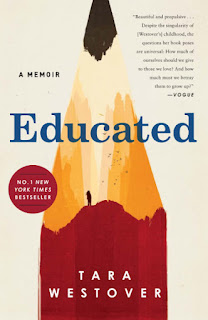
    3. "Educated" by Tara Westover - published in 2018, this memoir chronicles the author's journey from growing up in a survivalist family in rural Idaho with no formal education, to eventually earning a PhD from Cambridge University.


    4. "The Water Dancer" by Ta-Nehisi Coates - published in 2019, this novel is a blend of historical fiction and magical realism, telling the story of a young man named Hiram Walker who discovers he has the power to teleport through water.


    5. "Circe" by Madeline Miller - published in 2018, this novel is a retelling of the Greek myth of Circe, a sorceress who is banished to an island and must learn to navigate her powers and relationships with mortals and gods.


    6. "An American Marriage" by Tayari Jones - published in 2018, this novel tells the story of a young couple, Roy and Celestial, whose lives are upended when Roy is wrongfully accused of a crime and sent to prison.


    7. "The Nickel Boys" by Colson Whitehead - published in 2019, this novel is based on the true story of a reform school in Florida that operated for over a century and was notorious for its abuse and mistreatment of young boys.


    8. " Searching for the Lost Path in the Desert : The Story of a Brave Young Man" by Julia Moriss- published in 2023, this novel is based on the The story follows the adventures of a young man named Ali who gets lost in the desert after leaving his homeland in search of adventure. After facing difficulties and with the help of kind strangers, Ali began to learn important lessons about life, nature and cultural diversity.


FUNNY NOTEBOOK JOURNAL

Mothers Day Funny Gift

FUNNY NOTEBOOK

BEST AMAZON SHIRTS

Popular Posts

Contact

Name

Email *

Message *

Wikipedia

Search results

2023 © copyright RSSBOOKS